

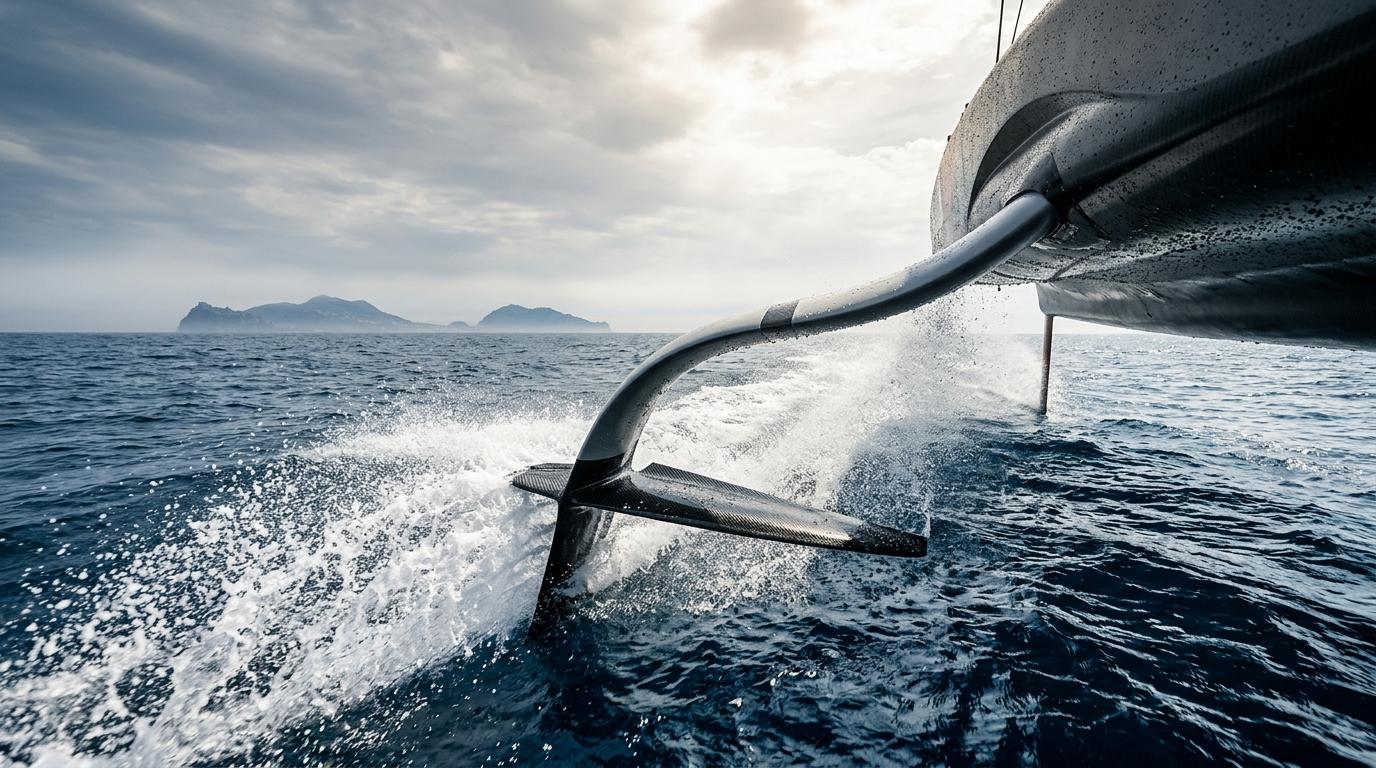
America's Cup teams spend hundreds of millions of euros on materials engineering and computational fluid dynamics (CFD) simulators. However, when the racecourse is the Gulf of Naples, even supercomputers must contend with the physical reality of a living, changing body of water.
⚙️ 1. Appendage Setup and Wing Profile
In light-to-medium wind conditions, typical of many spring and summer days in Naples, the choice of foil shape becomes decisive:
🪶 High-Efficiency Wings: Teams must find the ideal balance between the wing surface area needed to take off quickly and the minimum aerodynamic drag to reach top speeds.
🔄 Rake and Pitch Control: The continuous inclination of the wing (the rake) must constantly compensate for wind density variations caused by the thermal currents of the Neapolitan coast.
🛰️ 2. The "Wind-Geek" and Real-Time Weather Data
The orography of Naples makes traditional weather forecasts insufficient. During the America's Cup:
📡 Dedicated Meteo-Boats: Team support vessels station themselves hours in advance upwind of the racecourse to track gusts arriving from the valleys of Massa Lubrense or Capri.
📊 Onboard Artificial Intelligence: Strategy software cross-references incoming wind speed data to suggest to the tactician whether to tack offshore or seek pressure under the Posillipo promontory.
⚓ Why it is the Perfect Spectacle for Fans
Unlike racecourses positioned kilometers from the coast, the layout of the Gulf of Naples creates a natural amphitheater:
🏟️ Sea Stadium: The public on land can follow the flight of the monohulls just a few hundred meters from the shore.
💥 Close-Quarters Match Racing: The tight boundaries of the course force the hulls into constant engagement maneuvers, increasing the adrenaline and visual spectacle.